How to pick a tee weight: a buyer's guide
4.2 oz, 5.3 oz, 6.1 oz. The difference between a fashion tee and a workhorse blank lives in a single decimal. Here's a buyer's-guide breakdown of the four practical weight bands.
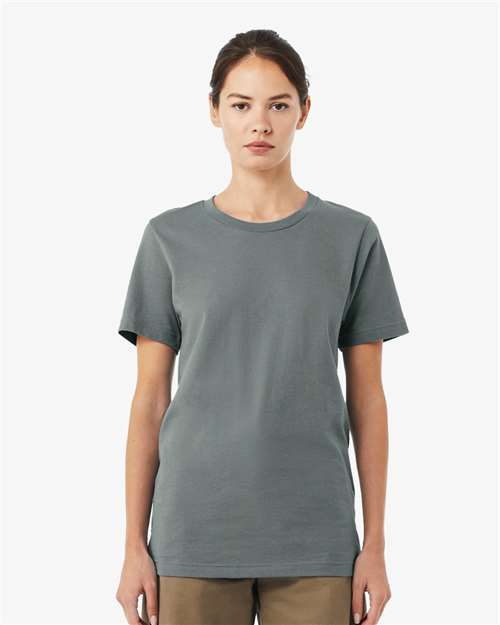
**Short version.** A blank's weight per square yard is the single most useful number on the spec sheet. For most screen-printed runs, the right answer sits between 5.0 and 6.5 oz. Lighter tees feel fashionable but wear out fast; heavier tees feel premium but cost more and run hot. The four bands below cover almost every job you'll quote.
What "weight" actually means on a spec sheet
A jersey-knit tee is rated in ounces per square yard (oz/yd²). The number is a direct measure of how much fabric is in the shirt: heavier means more cotton, denser knit, and usually a more substantial hand.
It is not a measure of quality. A great 4.2 oz fashion tee from a premium ringspun brand will outwear a mediocre 6.0 oz open-end heavyweight. But for a given brand at a given price point, weight is a good proxy for durability, opacity, and how the shirt prints.
The four practical weight bands
**Lightweight (3.8–4.5 oz):** the "fashion tee" zone. Drapes well, feels soft right out of the bag, reads modern. The trade-off: prints can show through on solid colors, the shirt can look translucent in bright light, and high-cycle wash performance is shorter than mid-weights. Bella+Canvas 3001 (4.2 oz) is the standard reference.
**Standard (4.6–5.5 oz):** the most-shipped band in the apparel catalog. Substantial enough to print cleanly, light enough to wear in summer, broad color availability across every major brand. Most retail tees and most printed-merch jobs land here. Gildan 64000 (4.5 oz), Bella+Canvas 3001CVC (5.4 oz), and Next Level 3600 (4.3 oz ringspun) are mainstays.
**Mid-heavyweight (5.6–6.5 oz):** the "real shirt" tier. Substantial in hand, prints like a workhorse, holds up to wash cycles. Garment-dyed tees often live here. Comfort Colors 1717 (6.1 oz garment-dyed), Hanes 5180 Beefy-T (6.1 oz), and Champion T425 (6.1 oz) are the classics.
**Heavyweight (6.6 oz+):** the workwear, skate, and premium-streetwear zone. Reads expensive, prints like canvas, runs hot in summer. Camber 301 (8.0 oz) and Shaka Wear Max Heavy (7.5 oz) are favorites for premium retail merch.
How to pick by use case
**Promotional and event tees (low wear, high volume):** lightweight or standard. The shirt is worn a few times; cost-per-piece matters more than longevity.
**School and team spirit wear:** standard. Broad youth-through-3XL availability, washes hold up to a season of practice, price stays reasonable across the size curve.
**Retail merch and brand drops:** mid-heavyweight. The garment is doing brand work and a 4.2 oz tee reads "promo." Garment-dyed Comfort Colors 1717 is the safe default.
**Workwear, skate, premium streetwear:** heavyweight. The customer expects the shirt to feel substantial. Don't compromise on weight here.
Specs to confirm before you commit
**Cotton type.** Ringspun is softer and prints crisper than open-end. Combed ringspun is softer still. The spec sheet will say.
**Pre-shrunk or not.** Most modern blanks are pre-shrunk; a few heavyweights and garment-dyed styles still shrink half an inch on the chest after the first wash. Check before sizing.
**Side-seam or tubular construction.** Side-seamed shirts hold their shape better and look more retail. Tubular shirts (no side seam) cost less and run a little boxier: fine for events, less ideal for retail.
**Color availability.** A 5.3 oz blank in 40 colors gives you more flexibility than a 6.0 oz blank in 12. Filter by color count if you're running a multi-color program.